
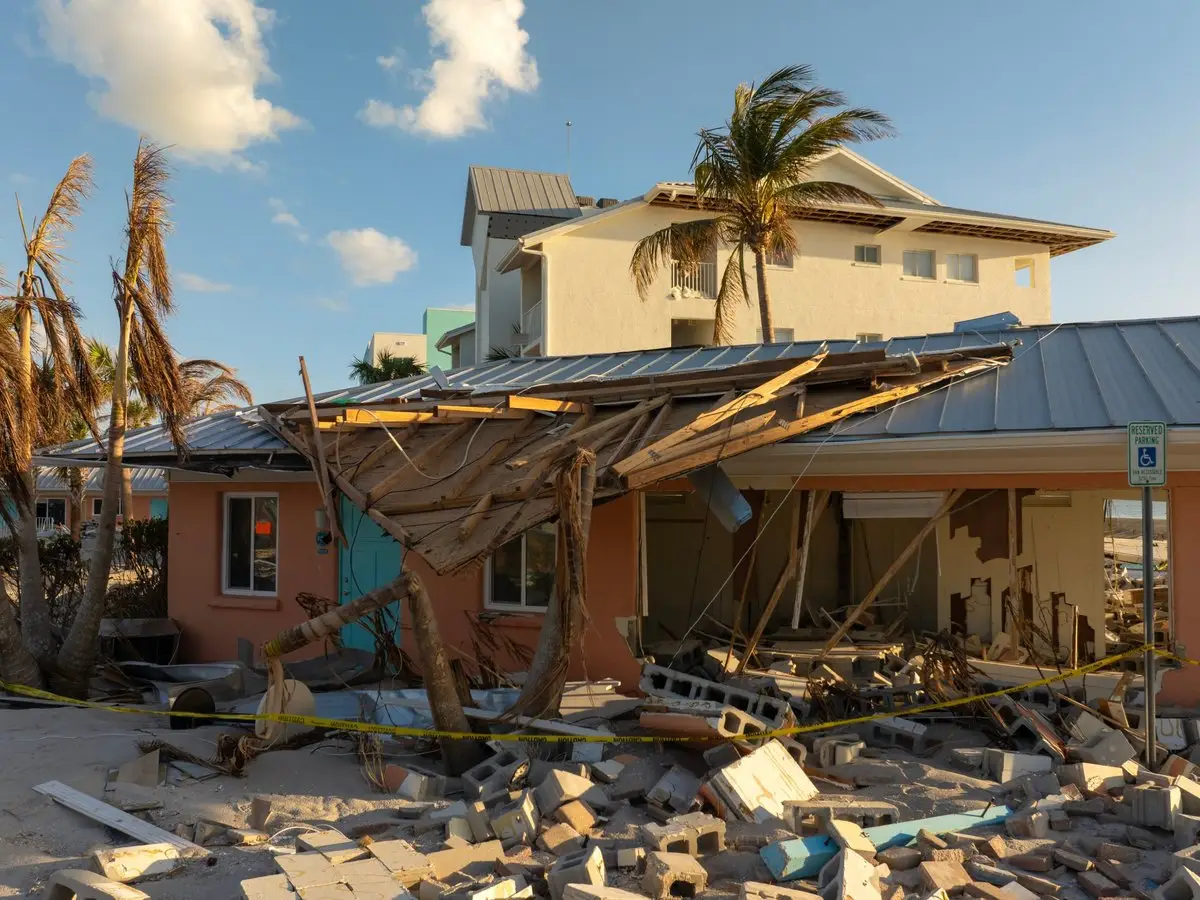
Executive Summary
- Free county pickup covers sorted, loose, storm-generated residential debris placed on the public right-of-way. Escambia County has said Hurricane Isaias cleanup could run up to 4 months, with multiple passes.
- Commercial debris, debris left by contractor work, and anything still attached to a damaged structure are not part of the county program.
- Call a licensed demolition contractor when walls, roofs, or foundations failed, when a structure is unsafe to enter, or when you need a clean, build-ready lot fast.
Hurricane Isaias made landfall as a Category 2 storm near Destin and left debris piles from Pensacola to Panama City. Local curbside programs have strict rules, and this guide explains where cleanup ends and structural demolition begins.
What Does Escambia County Pick Up After a Hurricane?
Escambia County collects storm-generated residential debris that is sorted into two piles and placed on the public right-of-way. The right-of-way is the strip between the street and your sidewalk, ditch, utility pole, or easement. Debris must be loose, not bagged, and only residential debris qualifies.
The two categories are:
Vegetative debris: whole trees, stumps, branches, trunks, and leafy material.
Construction and demolition (C&D) debris: damaged lumber, wallboard, glass, metal, roofing, tile, furnishings, and fixtures.
Keep piles at least 4 feet from mailboxes, water meters, fire hydrants, and other above-ground utilities. Never stack debris under low-hanging power lines. Check current set-out dates on the county’s Escambia County Waste Services page.
How Long Does Hurricane Debris Removal Take in Pensacola?
County officials estimated Isaias cleanup could take up to 4 months, and crews will make several passes. Inside city limits, Pensacola planned at least two passes, each taking roughly 4 to 5 weeks. Leave remaining debris sorted at the curb if your street gets skipped on the first pass.
The city alone estimated about 1.2 million cubic yards of Isaias debris. If you need to rebuild or sell, waiting months for a final pass may not work.
What Won’t the County Program Take?
The county will not haul debris from commercial property, debris generated by a hired contractor, or anything that is still part of a standing structure. If you hire a crew to cut a fallen tree, that crew is responsible for hauling the debris away. It should not end up on the right-of-way.
Other gaps homeowners and property managers run into:
- Business and commercial waste must go through a private hauler or debris contractor.
- Partially collapsed buildings cannot be “set out” because tearing them down is demolition, not cleanup.
- Slabs, footings, and pool shells are outside the curbside scope entirely.
| Debris Situation | County Curbside Program | Licensed Demolition Contractor |
|---|---|---|
| Sorted limbs and leaves at the curb | Yes, free on scheduled passes | Not needed |
| Water-damaged drywall, carpet, and furniture | Yes, if sorted as C&D | Faster for large gut-outs |
| Tree cut by a hired crew | No, the crew must haul it | Yes, hauled the same day |
| Commercial or rental property debris | No | Yes, with itemized pricing |
| Roof collapse or failed load-bearing walls | No | Yes, engineered structural tear-down |
| Foundation, slab, or pool removal | No | Yes, with concrete crushing and backfill |
When Do You Need a Demolition Contractor Instead?
You need a licensed contractor when the damage is structural, the property is commercial, or the debris cannot safely be moved by hand. A home with a failed roof system, cracked load-bearing walls, or a shifted foundation is a structural tear-down, not a curb pile. Escambia County and Bay County both require permits for that work.
Our hurricane demolition services cover storm-damaged homes and commercial buildings across the Florida Panhandle. For full house removals, our residential demolition team handles the permit, the tear-down, and the final grade.
Why Does Safety Matter So Much in Storm Cleanup?
Storm debris sites are among the most dangerous work zones on the Gulf Coast. Downed lines, unstable framing, nails, and chainsaw kickback injure residents every hurricane season.
Every Demolition Pros crew works under strict OSHA compliance, following the federal OSHA hurricane recovery safety guidance for fall protection, PPE, and heavy equipment operation. We call in 811 utility locates before any excavation and set up dust containment around damaged drywall and older building materials. On larger structures, we use high-reach excavators so no worker stands under a compromised wall.
How Do You Avoid Storm-Chaser Contractors?
Hire only a licensed, insured Florida contractor who gives you a written, itemized price before work starts. Florida’s Attorney General warned residents after Isaias about unlicensed, often out-of-state crews offering debris and repair work. A legitimate contractor will pull permits in your name and never ask for full payment up front.
Before you sign, look for:
- Turnkey permitting with Escambia County, the City of Pensacola, or Bay County.
- Upfront itemized pricing with no “load fees” added on demolition day.
- Proof of insurance and documented OSHA training.
- A written cleanup guarantee for the finished site.
What Does a 100% Clean Lot Guarantee Mean?
It means we leave your property free of debris, nails, concrete, and buried structural material when the job is done. After the tear-down, we remove the slab and footings, recycle concrete through concrete crushing, place engineered dirt backfill, and finish with grading for drainage. Your lot is ready for an adjuster, a builder, or a buyer.
When the structure itself is the debris, call Demolition Pros for a safe, permitted, guaranteed-clean result from Pensacola to Panama City.