
Executive Summary
- Permits are mandatory: Septic tank abandonment during a Florida demolition requires a state abandonment permit, and every private well needs a separate plugging permit from the Northwest Florida Water Management District.
- The method is set by rule: A licensed hauler pumps the tank, the tank is crushed or removed, and the cavity is backfilled with clean sand; wells are grouted solid from bottom to top by a licensed well contractor.
- Timeline: Pumping, crushing and backfill usually take 1 day on site, and Florida rules require a discontinued system to be abandoned within 90 days.
Most homes in rural Escambia County, Santa Rosa County and parts of Bay County were built on septic, and many older Gulf Coast properties still draw water from a private well. When the house comes down, neither one can simply be left in the ground. At Demolition Pros, we treat buried tanks and open well casings as job-site hazards first and paperwork second.
Who Regulates Septic Tank Abandonment in Northwest Florida?
The Florida Department of Environmental Protection (DEP) regulates septic tank abandonment in Escambia, Santa Rosa, Okaloosa and Bay counties. Statewide oversight moved from the Department of Health to DEP on July 1, 2021, and DEP took over direct permitting for 16 Panhandle counties starting January 2, 2025.
The governing rule is Chapter 62-6.011 of the Florida Administrative Code. You can review current forms and contacts on the Florida DEP Onsite Sewage Program page.
Do I Need a Permit to Abandon a Septic Tank Before Demolition?
Yes, a septic abandonment permit is required whenever a system is taken out of service because the building it served is demolished. Most local building departments will not close out a demolition permit until the abandonment is approved.
We fold this into our turnkey permitting. The septic permit, the demolition permit and the 811 utility locates are pulled together so nothing stalls the schedule.
How Is a Septic Tank Abandoned on a Demolition Site?
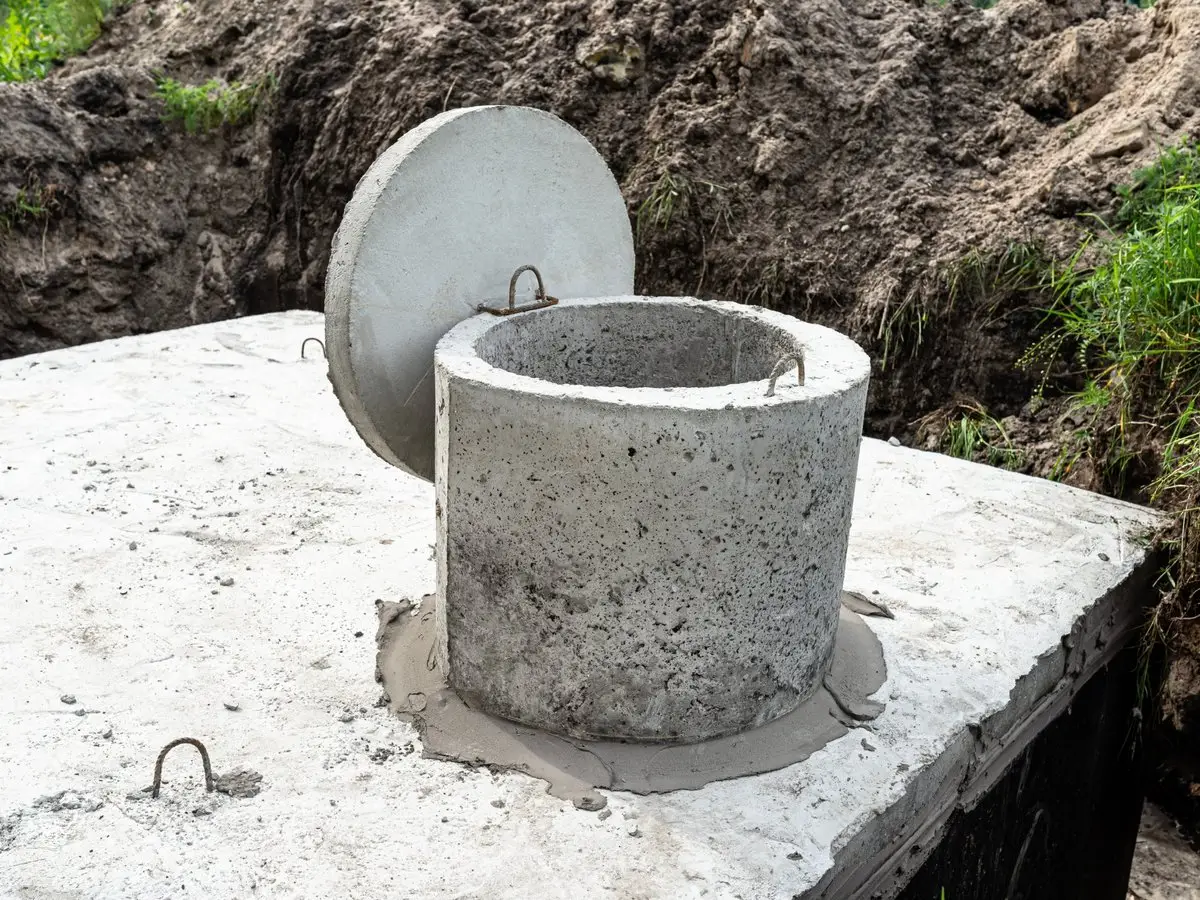
The tank is pumped empty by a licensed hauler, broken down or removed, then filled with clean sand and buried under compacted soil. Here is the sequence our crews follow:
- Locate and expose: The tank lid and inlet line are marked during utility locates and uncovered with an excavator.
- Pump out: All septage and wash water are removed by a licensed septage service and taken to a DEP-regulated treatment facility.
- Collapse or remove: The lid is crushed and the bottom is broken so the tank cannot hold water, or the entire tank is pulled and hauled for concrete crushing.
- Backfill: The cavity is filled with clean sand or engineered dirt backfill, compacted in lifts and graded to match the lot.
- Inspection and documentation: The work is inspected or certified, and the permit is closed out.
Drainfield pipe that sits inside a future building footprint is excavated and hauled off. Lines outside the footprint are handled according to the site plan and the builder’s needs.
What Happens to a Private Well When a House Is Torn Down?
An unused well must be permanently plugged by a licensed water well contractor under a permit from the Northwest Florida Water Management District. An open casing is a direct path for surface runoff, fuel and septic waste to reach the Floridan Aquifer, the main drinking water source for the Florida Panhandle.
Plugging means filling the well with cement grout from the bottom of the hole to the surface, then cutting the casing below grade. If the new owner plans to reuse the well, it must be capped, protected from equipment traffic and permitted for continued use.
| Item | Septic Tank | Private Well |
|---|---|---|
| Regulator | Florida DEP (Chapter 62-6, F.A.C.) | Northwest Florida Water Management District |
| Who does the work | Licensed septic contractor and septage hauler | Licensed water well contractor |
| Method | Pump, crush or remove, backfill with clean sand | Grout solid from bottom to top, cut casing below grade |
| Typical on-site time | 1 day | Half a day to 1 day |
| Proof of completion | Inspection or contractor certification | Well abandonment report filed with the district |
Is It Safe to Pump or Crush a Septic Tank Yourself?
No, a septic tank is one of the most dangerous spots on a residential demolition site. Tanks hold methane and hydrogen sulfide, and a collapsed lid can drop a person or a skid steer into a pit full of raw sewage.
We run every tank and well as a controlled hazard under strict OSHA compliance:
- No-entry rule: Workers never enter a septic tank, which OSHA treats as a permit-required confined space.
- Excavation protection: Any trench deeper than 5 feet is sloped, shored or shielded under the OSHA trenching and excavation standards.
- Exclusion zones: Open tanks and well heads are barricaded until they are filled, so no one walks or drives over a void.
Will My New Home Need to Connect to Sewer?
If a public sewer main is available at the lot, your rebuild will likely be required to connect instead of installing a new septic system. In Pensacola, that usually means coordinating with ECUA; in Panama City, it means the city or Bay County utilities.
We cap the old sewer lateral or septic inlet at the property line and note its location for your builder. That keeps the new tap clean and avoids digging up a finished pad later.
What Does the 100% Clean Lot Guarantee Cover?
Our 100% clean lot guarantee covers every buried tank, well casing, slab and debris pile tied to the structure we demolish. When we leave, the lot is graded, compacted and ready for the next phase.
You get upfront itemized pricing, so septic abandonment and well plugging appear as their own line items, not surprise change orders. For full teardowns, see our residential demolition services, or visit our Pensacola demolition contractors page for local project details.